

This article by Claudia Irizarry Aponte was originally published on DEC 30, 2025, 5:00 AM EDT by THE CITY.
Sign up here to get the latest stories from THE CITY delivered to you each morning.
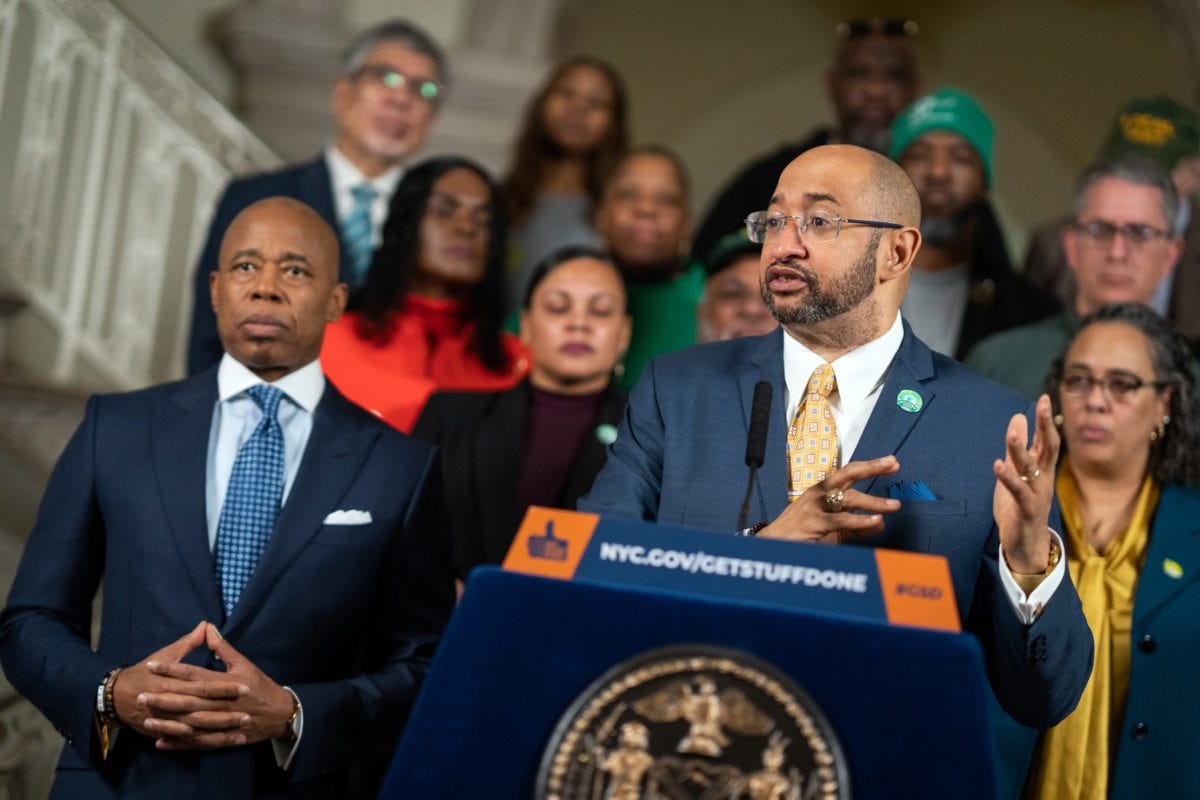
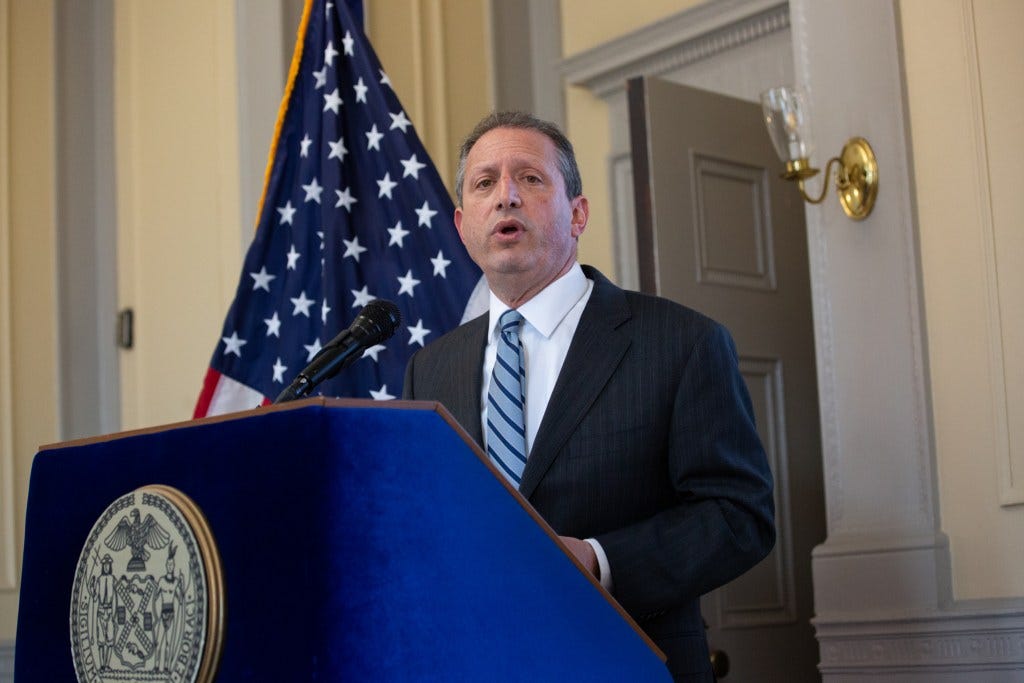
An explosive audit from City Comptroller Brad Lander recommends dissolving a fund that helps finance city employees health benefits, concluding that it is billions of dollars in the red after being tapped for years by municipal unions and mayors in labor bargaining.
Declaring the fund “insolvent,” Lander’s auditors determined that the Health Insurance Stabilization Fund owes the city $3.1 billion, not counting obligations that have yet to be tallied for fiscal years 2024 and 2025.
The city’s Office of Labor Relations and the Municipal Labor Committee, the consortium of 102 public sector unions, “did not take adequate steps to improve the Fund’s position,” Lander wrote in an introduction to the report, released Tuesday. The fund is paid for by taxpayers and jointly managed by the city and the MLC.
“Ordinarily, the audit would propose recommendations to management to address deficiencies. However, given that [the fund] is insolvent and cannot meet its intended purpose, the audit recommends that the City work with the MLC to dissolve the Fund,” Lander wrote. “The City should also appropriately budget for healthcare costs and benefits.”
The labor relations team for Mayor Eric Adams says the funds were not misused, and both the city and unions say that the funds have been used consistently with their intended purpose of helping pay for employee health care.
The audit also describes a controversial proposed move to a lower-cost Medicare Advantage plan for city retirees as being a direct response to projections of the fund’s looming insolvency — a conclusion the city and the unions do not dispute. Adams abandoned that switch after massive pushback from retirees and elected officials that included a lengthy legal battle.
Established in the mid-1980s, the unions and City Hall created the Health Insurance Stabilization Fund to help cover the cost of adding a new health plan, GHI, for city employees in addition to longstanding HIP coverage. The idea was for the fund to pay for the difference in costs between the two, depending on their premiums.
A 1995 agreement specified that the fund should only be used for that purpose, known as equalization, and also said that in the event the fund ran dry, the Municipal Labor Committee “must reduce benefits and/or impose employee/retiree payroll deductions to satisfy the shortfall,” according to the audit.
As the fund grew and health costs soared, the city Office of Labor Relations and the city’s unions began using the fund to pay for billions in supplemental benefits and for workers’ raises — deviating from the fund’s intended purpose of balancing premium rates and setting it on course to insolvency, the comptroller’s audit found.
The probe paints a picture of the city and the unions using the fund as a virtual piggy bank, authorizing $4.3 billion from 2001 to 2024 in lump sum payments to the city and to union-administered general welfare funds, including $1 billion to cover the costs of raises, deferred layoffs and other benefits.
A turning point, the financial analysis suggests, was a 2014 Healthcare Savings Agreement brokered by the administration of Mayor Bill de Blasio to settle union contracts that had expired under his predecessor, Michael Bloomberg. That deal reduced the city’s obligations to pay into the health fund as part of a health care cost savings scheme and ultimately shrunk the fund’s balance by $3.3 billion. Routine expenses for additional benefits including prescription drug, chemotherapy and weight loss programs also got charged to the fund, according to the audit.
A spokesperson for the mayor did not respond to a request for comment about the audit. Henry Garrido, a co-chair of the MLC and the head of the city’s largest municipal workers’ union, could not be reached for comment.
Few Records
In detailed responses to auditors, the city’s Office of Labor Relations and the Municipal Labor Committee argued that the fund can be used for any mutually agreed upon purpose, and that nothing prevented them from modifying the use of the fund through collective bargaining. The funds were used to pay for essential benefits, the city and the MLC told auditors.
However, neither OLR nor the MLC dispute the recommendation that the stabilization fund be dissolved.
“The Stabilization Fund’s assets were not misused at any time. They were used to pay for essential benefits for City employees as agreed to through collective bargaining, including coverage of prescription drugs through the welfare funds, the PICA program providing lifesaving specialty drugs, averting layoffs, and funding labor agreements for the entire workforce,” OLR commissioner Renee Campion wrote in response to a draft version of the audit on Dec. 3.
“There is nothing improper about any of these uses, which were agreed to by the MLC and every individual union through the collective bargaining process.”
The MLC, in a response attributed to its board members, struck a similar chord.
“The Stabilization Fund was created through collective bargaining between the City and the MLC, and never set up to operate under strict limitations of purpose,” they wrote on Dec. 3. “It is governed not by a single 40-year-old agreement, but by the New York City Collective Bargaining Law which empowers the MLC and the City to enter into agreements and then later modify those agreements to address changing circumstances.”
But the comptroller’s office found no record of modifications. It determined that the responses from the OLR and the MLC “do not sufficiently reckon with the nature of the original 1985 agreement and their mutual obligations as a result of the restricted nature of the Fund.”
News of the imminent audit went public last week, after THE CITY obtained audio from an MLC membership meeting where the group’s de facto leader dismissed the probe as misguided and politically motivated.
In that Dec. 16 meeting, Garrido railed against the comptroller’s probe as “outrageous,” “unprecedented” and a “political stunt.” Lander, who released the probe on the second-to-last day of his term as comptroller, is running for Congress in a district encompassing parts of Brooklyn and lower Manhattan.
The MLC executive board condemned the meeting leak in a Dec. 26 internal memo and despaired that its efforts to correct or defer what they described as a “false and biased” probe by Lander’s staff to the next comptroller, Mark Levine, may not materialize as a result of the breach.
“Here, when faced with a false and biased assessment of the Stabilization Fund by Comptroller staff, one we were seeking to correct if not defer to the next administration, we cannot possibly imagine what was to be gained by leaking the discussion,” the executive board wrote. “Those prospects may well be now dimmed.”
Garrido is a leader of Levine’s transition committee. A spokesperson for Levine’s transition did not respond to a request for comment.
With the probe, Lander is inserting himself into a long-simmering conflict between the unions and the administration of Mayor Eric Adams that this spring exploded into public view over which side is responsible for billions of dollars in pledged health care savings.
The comptroller’s audit determined that the city and the MLC knew that the fund was near insolvency as far back as 2018 — and drew up a controversial plan to switch retirees to Medicare Advantage specifically to make up for the funding shortfall. Adams championed but eventually abandoned that effort even after being cleared by the state’s highest court to proceed, and neither his administration nor the MLC have identified any alternatives.
An additional cost-saving measure to switch the city’s active workers to a self-insured plan jointly administered by EmblemHealth and UnitedHealthcare is slated to go into effect on Jan. 1 and save taxpayers a maximum $900 million annually. But the Comptroller’s outlook is far less rosy, with auditors claiming that the sum “would not ensure the solvency of [the fund] even if achieved.”
The comptroller’s office also determined that the fund “lacks transparency and has inadequate governance and decision-making capacity,” and alleges that the city’s labor negotiators submitted inaccurate statements to auditors, including “false annual certifications” of compliance with accounting standards.
Meeting agendas and other records were lacking, the audit found, and financial disclosures excluded “significant unreported liabilities.”
“The Fund balances were not accurate, and the Fund, which was established for the purpose of maintaining a reserve, has no reserves and is unable to meet its financial obligations,” according to the audit.
Editor’s Note:
Articles published by THE CITY are free to republish under the Creative Commons Attribution license.
Related articles:


The announcement of Comptroller Lander’s audit a week before he’s out of office is odd and he’s already candidate for Congress, politics makes for strange bedfellows